Despite surging demand for nurses in the workforce, thousands of qualified applicants are turned away each year due to the lack of nursing faculty and clinical placement seats. Rural health programs feel this bottleneck hardest. Traditional simulation, while effective, demands heavy resources: faculty experts for pre-briefing and debriefing, simulation technicians to manage equipment, onsite roleplayers, and specialized manikin labs. For rural health centers and community colleges operating with lean teams, that level of staffing and infrastructure is nearly impossible to sustain at scale, even as state governments open new funding pathways for technology-enabled training solutions.
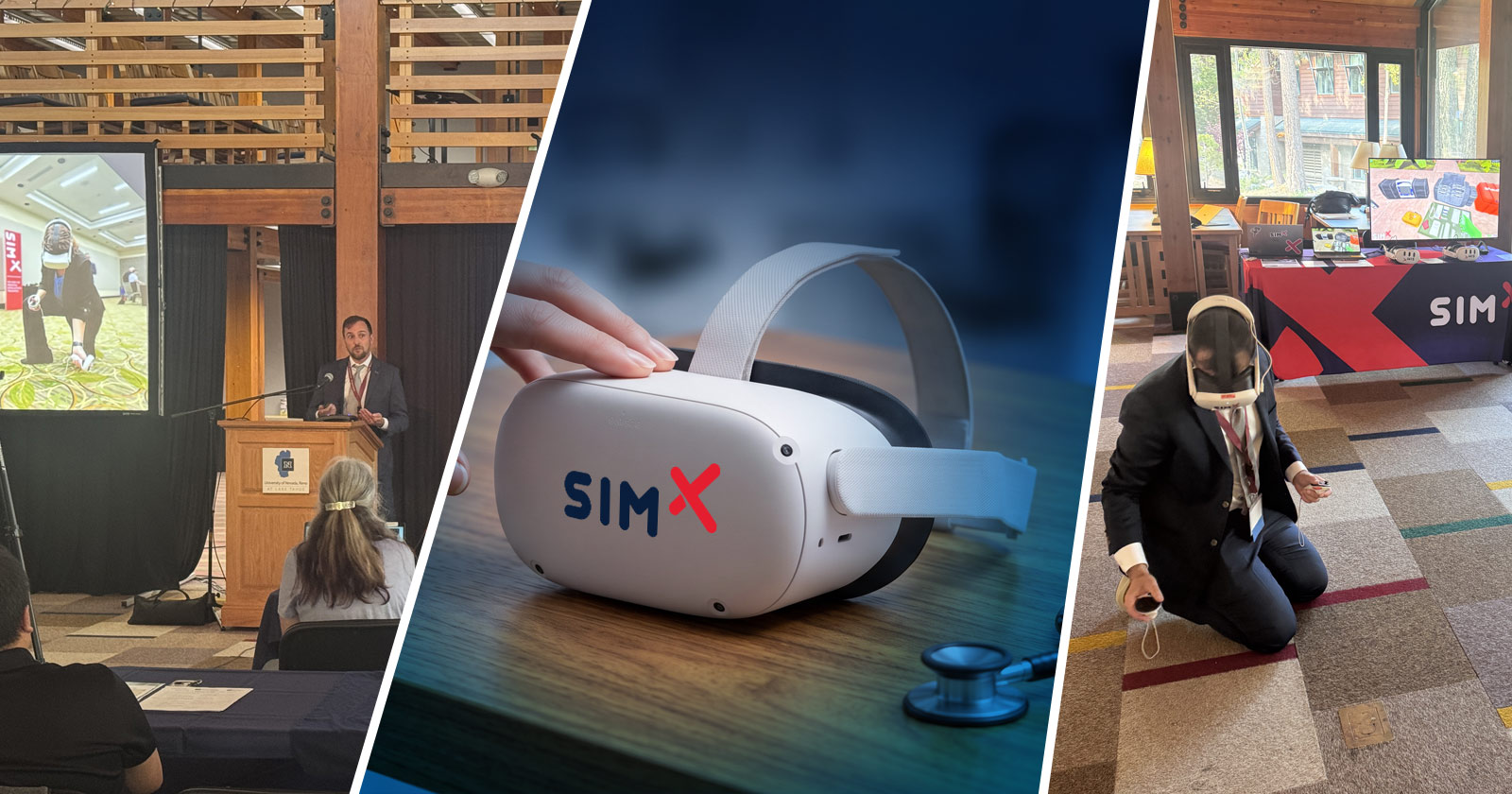
This gap, and how to close it, was the focus of Dr. Michael Barrie’s presentation at the Nevada Virtual Health: The Power of Simulation in Digital Medicine 2026 conference on September 10, 2026. As a SimX Clinical Education Manager, Dr. Barrie explored how virtual reality (VR) and artificial intelligence (AI) addresses the unique funding, staffing, and geographic barriers facing rural clinical training programs today.
Scaling Rural Health Transformation with Immersive VR and AI
Dr. Barrie emphasized that VR is not meant to replace traditional training, but rather serve as a powerful added layer that removes equipment and faculty time bottlenecks. By eliminating physical room and equipment constraints, immersive simulation provides direct, actionable learning experiences. Citing a 2025 study in Clinical Simulation in Nursing (Chidume et al., “The VR embedded instructor”), Dr. Barrie highlighted student feedback from Auburn University: “We were able to get instant feedback from our instructor, so we knew instantly if we made a mistake or did the right thing.”
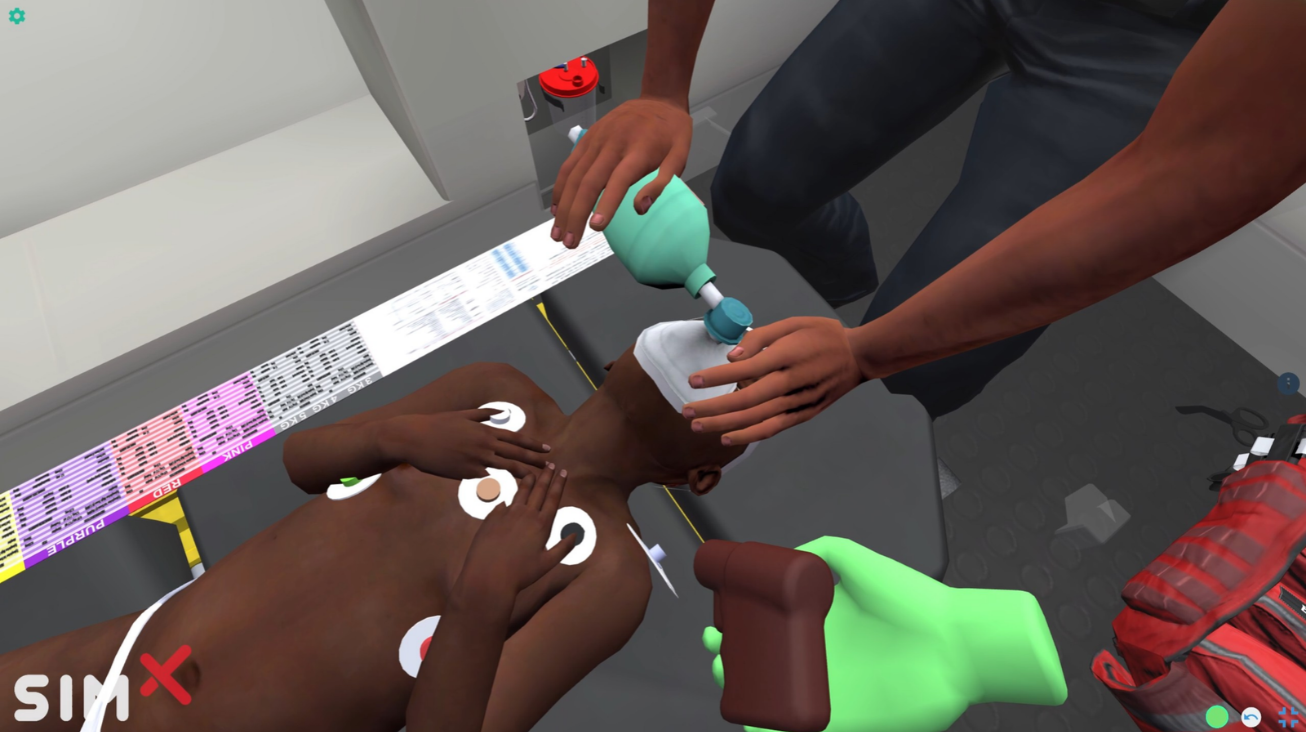
With tools like SimX’s AI Assistant and Autonomous Simulation, learners can practice high-acuity scenarios independently. This drastically reduces the burden on faculty, allowing students to run clinical encounters repeatedly without requiring constant hands-on oversight (See how SimX aligns with the Rural Health Transformation Act’s five strategic goals.)
Bringing the Experience to the Learner
VR is not inherently superior to other modalities on its own, but it offers consistently strong benefits for knowledge retention while eliminating geographic barriers. Ultimately, Dr. Barrie emphasized that the greatest opportunity for Rural Health Transformation lies in accessibility. Immersive simulation closes the gaps where patient volume, distance, infrastructure, or faculty availability historically limited training. By delivering high-acuity scenarios directly to learners in their own communities, technology-enabled simulation helps rural health programs build and retain a resilient, highly trained local workforce.
Go deeper on these topics at our free CE webinar, “Immersive Simulation in Healthcare Education: Driving Outcomes, Engagement, and Innovation,” on October 7th at 9 a.m. PT.