0

Tactical Combat Casualty Care (TCCC)

Reset

TCCC Blast Injury with ARSC

VALOR Program

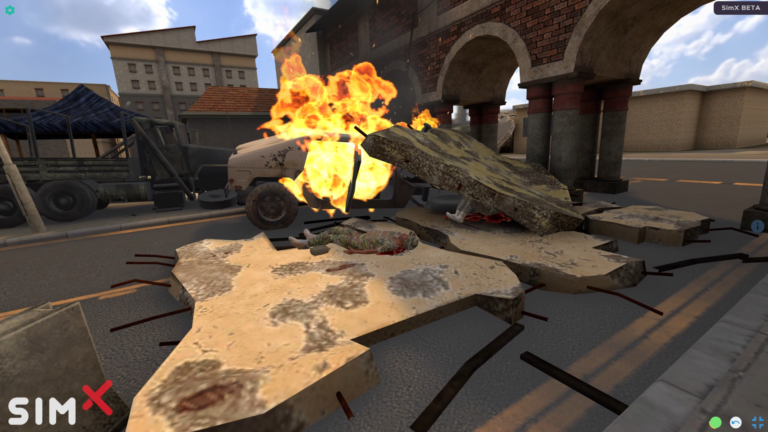
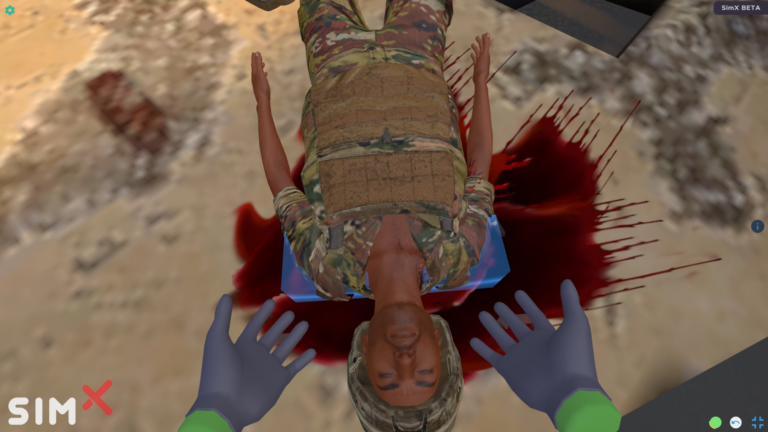
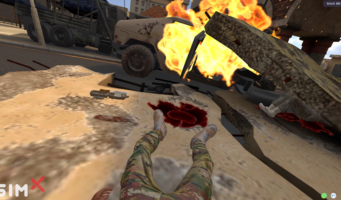
The scenario begins in a building of opportunity, evaluating a casualty immediately after being brought in by a medic following a dismounted blast injury. The casualty sustained a left below-the-knee traumatic amputation, a left upper extremity amputation, and penetrating trauma to the abdomen. There is no significant chest trauma. A...

Tactical Combat Casualty Care (TCCC)

The scenario begins in a building of opportunity, evaluating a casualty immediately after being brought in by a medic following a dismounted blast injury. The...
Case Information:
Bundles:
Learner Population: Military
Specialty: Tactical Combat Casualty Care (TCCC)
Author: VALOR Program
Language: English
Room size: 20x20
Setting: Urban Warzone (Building of Opportunity)
Patient ect:
Patient Gender: Male
Tags: ARSC, blast injury, damage control laparotomy, damage control resuscitation, massive transfusion, prolonged casualty care, TCCC, traumatic amputation,
Coming Soon

TCCC-ASM Tier 1: Drone Strike

SimX

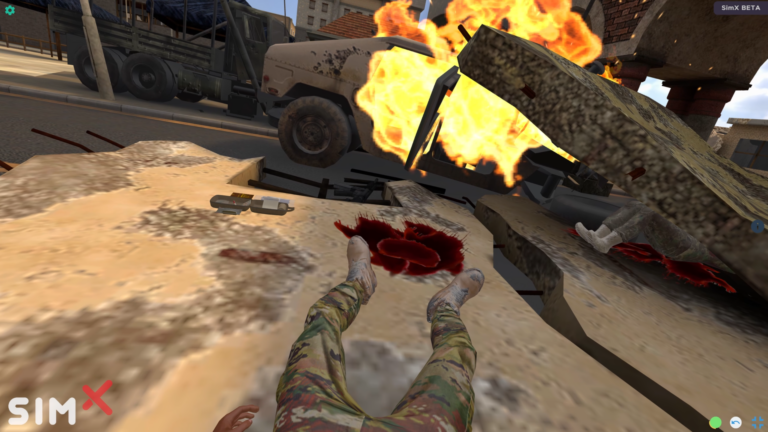
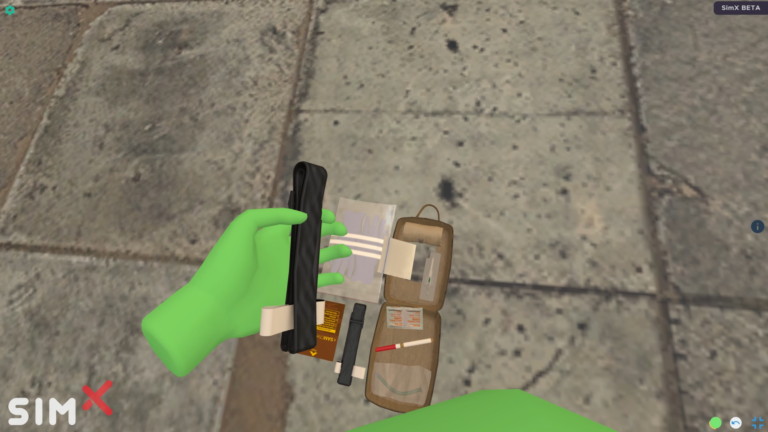
While navigating a debris-choked, narrow alleyway during an urban clearance mission, Sgt Jenkins' squad hears the high-pitched whine of an incoming enemy First-Person View (FPV) kamikaze drone. The drone maneuvers around a collapsed brick building and detonates in mid-air just meters away from him. The blast shatters nearby windows, showers...
Tactical Combat Casualty Care (TCCC)

While navigating a debris-choked, narrow alleyway during an urban clearance mission, Sgt Jenkins' squad hears the high-pitched whine of an incoming enemy First-Person View (FPV)...

Case Information:
Bundles:
Learner Population: Military
Specialty: Tactical Combat Casualty Care (TCCC)
Author: SimX
Language: English
Room size: 16x16
Setting: Outdoor
Patient ect:
Patient Gender: Male
Tags: Care Under Fire, CoTCCC Guidelines, Drone Strike Scenario, Life-Threatening Hemorrhage, Military Medical VR, Patient Extrication, Tactical Combat Casualty Care, Tactical Medicine, TCCC, tourniquet application,

TCCC Blast Injury

VALOR Program

Set in a field environment, the casualty has suffered a right leg amputation and right sided pneumothorax after IED injury. Participants must apply two leg tourniquets, identify all wounds, recognize tension pneumothorax, perform a needle decompression, and give a dose of antibiotics.

Tactical Combat Casualty Care (TCCC)

Set in a field environment, the casualty has suffered a right leg amputation and right sided pneumothorax after IED injury. Participants must apply two leg...

Case Information:
Bundles:
Learner Population: Military
Specialty: Tactical Combat Casualty Care (TCCC)
Author: VALOR Program
Language: English
Room size: 14x10
Setting: Urban Street
Patient ect:
Patient Gender: Male
Tags: antibiotics, Battlefield Medicine, blast injury, Casualty Triage, Field Care, hemorrhagic shock, IED Injury, Massive Hemorrhage, needle decompression, Tactical Combat Casualty Care, Tactical Field Care, TCCC, tension pneumothorax, tourniquet, wound care,

TCCC Blunt Trauma

VALOR Program

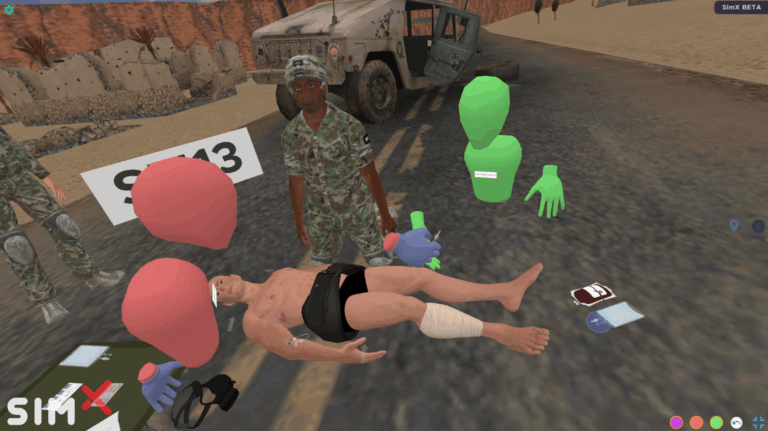
Set in a field environment, casualty is suffering from multiple traumatic injuries. Participants should conduct a MARCH survey, give TXA, and initiate blood transfusion for hemorrhagic shock. If performed, an ultrasound will demonstrate free abdominal fluid indicating intra abdominal hemorrhage. They should attend to a patient's pain, give antibiotics, provide...
Tactical Combat Casualty Care (TCCC)

Set in a field environment, casualty is suffering from multiple traumatic injuries. Participants should conduct a MARCH survey, give TXA, and initiate blood transfusion for...

Case Information:
Bundles:
Learner Population: Military
Specialty: Tactical Combat Casualty Care (TCCC)
Author: VALOR Program
Language: English
Room size: 13x11
Setting: Desert Road
Patient ect:
Patient Gender: Male
Tags: Airway Management, Analgesia, blood transfusion, Blunt Trauma, Circulation, Field Care, hemorrhagic shock, Hypothermia Prevention, MARCH survey, Massive Hemorrhage, resuscitation, Tactical Combat Casualty Care, Tactical Field Care, TCCC, trauma care, txa, wound care,

TCCC Dual Patient

VALOR Program

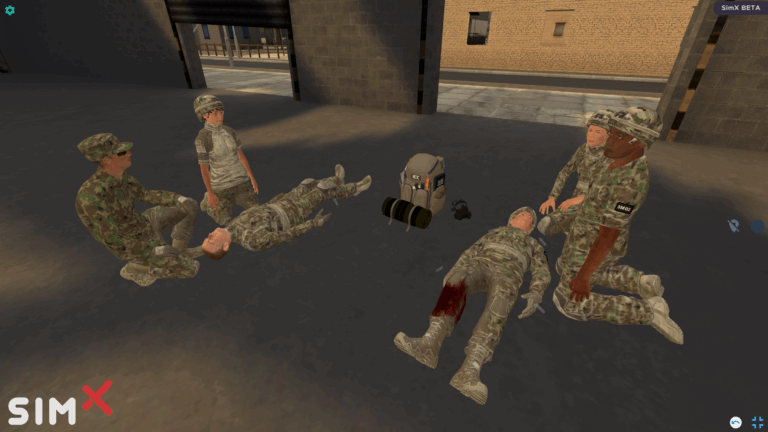
Set in a field environment, participants need to perform a MARCH assessment and manage life-threatening injuries for two wounded casualties. They both suffered blunt traumatic injuries. One casualty has a significant blunt head injury. The other casualty had blunt abdominal, chest, and lower extremity injuries. Participants will have to work...
Tactical Combat Casualty Care (TCCC)

Set in a field environment, participants need to perform a MARCH assessment and manage life-threatening injuries for two wounded casualties. They both suffered blunt traumatic...

Case Information:
Bundles:
Learner Population: Military
Specialty: Tactical Combat Casualty Care (TCCC)
Author: VALOR Program
Language: English
Room size: 14x11
Setting: Urban Street
Patient ect:
Patient Gender: Male
Tags: Abdominal Trauma, Airway Management, Battlefield Medicine, Blunt Trauma, Casualty Care, Chest Injury, dual patient, Field Care, head injury, hemorrhage control, hemorrhagic shock, Hypothermia Prevention, MARCH Assessment, multiple casualty, Shock Resuscitation, Tactical Combat Casualty Care, TCCC, triage,

TCCC Entrapment

VALOR Program

Set in a field environment, participants respond to a vehicle crash with two entrapped soldiers quickly requiring extrication. One soldier has a bleeding arm wound that requires a tourniquet, but they can be pulled to safety. The driver has a pinned/crushed leg and is unable to be moved, requiring a...

Tactical Combat Casualty Care (TCCC)

Set in a field environment, participants respond to a vehicle crash with two entrapped soldiers quickly requiring extrication. One soldier has a bleeding arm wound...

Case Information:
Bundles:
Learner Population: Military
Specialty: Tactical Combat Casualty Care (TCCC)
Author: VALOR Program
Language: English
Room size: 12x13
Setting: Desert Road
Patient ect:
Patient Gender: Male
Tags: Analgesia, antibiotics, Battlefield Medicine, combat medic training, extrication, field amputation, Hypothermia Prevention, low light conditions, MARCH survey, massive hemorrhage control, Shock Resuscitation, Tactical Combat Casualty Care, TCCC Entrapment, tourniquet application, triage, wound care,

TCCC Mass Casualty

VALOR Program

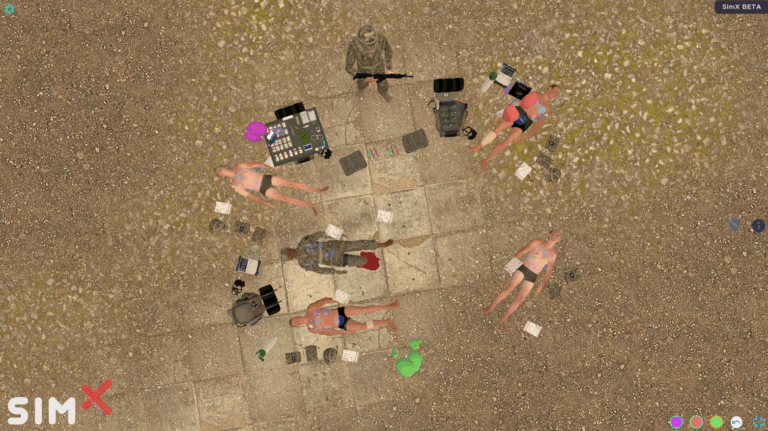
Set in a field environment, participants respond to the scene of a mass casualty event. There are six casualties that require initial triage, and participants should perform immediate life-saving interventions as indicated. The scene then moves to the casualty collection point, where participants can complete a MARCH survey and prepare...
Tactical Combat Casualty Care (TCCC)

Set in a field environment, participants respond to the scene of a mass casualty event. There are six casualties that require initial triage, and participants...

Case Information:
Bundles:
Learner Population: Military
Specialty: Tactical Combat Casualty Care (TCCC)
Author: VALOR Program
Language: English
Room size: 21x15
Setting: Outdoor
Patient ect:
Patient Gender: Male
Tags: Airway Management, Analgesia, antibiotics, Combat Medicine, Field Care, hemorrhage control, Hypothermia Prevention, Initial Assessment, MARCH Assessment, MASCAL, mass casualty, Massive Hemorrhage, Medical Simulation, Shock Resuscitation, Tactical Combat Casualty Care, Tactical Field Care, TCCC, trauma, triage, wound care,

TCCC Penetrating Trauma

VALOR Program

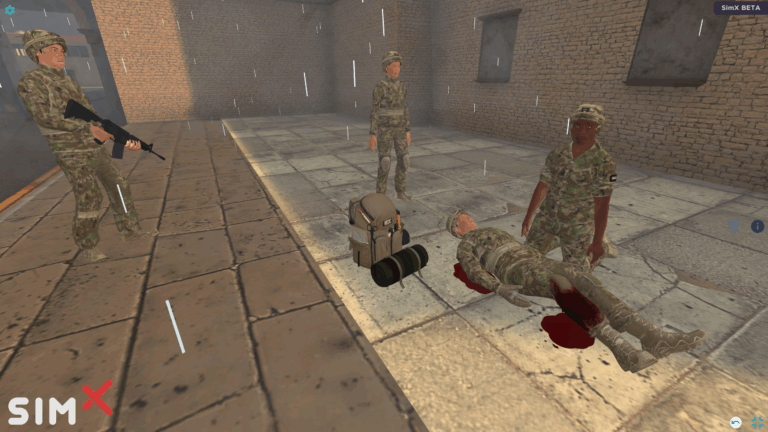
Set in a field environment, participants evaluate a casualty who suffered multiple gunshot wounds. The location is now secure. Participants should perform a MARCH survey, decompress tension pneumothorax, place leg tourniquet, and apply a foley to a junctional axillary wound.
Tactical Combat Casualty Care (TCCC)

Set in a field environment, participants evaluate a casualty who suffered multiple gunshot wounds. The location is now secure. Participants should perform a MARCH survey,...

Case Information:
Bundles:
Learner Population: Military
Specialty: Tactical Combat Casualty Care (TCCC)
Author: VALOR Program
Language: English
Room size: 12x12
Setting: Urban Street
Patient ect:
Patient Gender: Male
Tags: Battlefield Medicine, Gunshot Wounds, hemorrhage control, hemorrhagic shock, MARCH survey, Massive Hemorrhage, needle decompression, penetrating trauma, Point of Injury Care, Tactical Combat Casualty Care, Tactical Field Care, TCCC, tension pneumothorax, tourniquet application, trauma resuscitation, Trauma Simulation, wound care,

TCCC Severe Head Injury

VALOR Program

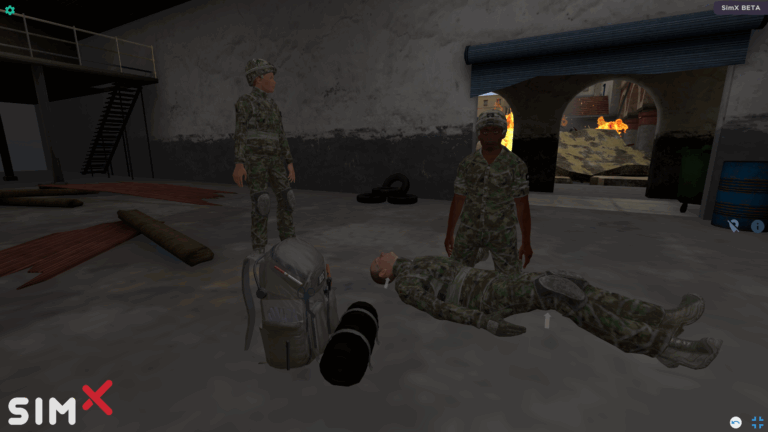
Set in a field environment, the soldier was in a blunt mechanism injury and suffered serious head injury. Initially he is conscious, but unable to provide much history. The participant should perform a MARCH assessment, recognize severe head injury and initiate appropriate life saving interventions such as airway protection, hypertonic...
Tactical Combat Casualty Care (TCCC)

Set in a field environment, the soldier was in a blunt mechanism injury and suffered serious head injury. Initially he is conscious, but unable to...

Case Information:
Bundles:
Learner Population: Military
Specialty: Tactical Combat Casualty Care (TCCC)
Author: VALOR Program
Language: English
Room size: 12x12
Setting: Urban Street
Patient ect:
Patient Gender: Male
Tags: airway interventions, Airway Management, Analgesia, antibiotics, Blunt Trauma, breathing assessment, circulation management, Field Care, hemorrhagic shock, hypertonic saline, Hypothermia Prevention, low light conditions, MARCH Assessment, massive hemorrhage control, pulse oximetry, severe head injury, Shock Resuscitation, Tactical Combat Casualty Care, Tactical Field Care, TCCC, wound care,