
0

VR training

Reset
Coming Soon

Recognition and Management of Cardiogenic Shock

TriHealth

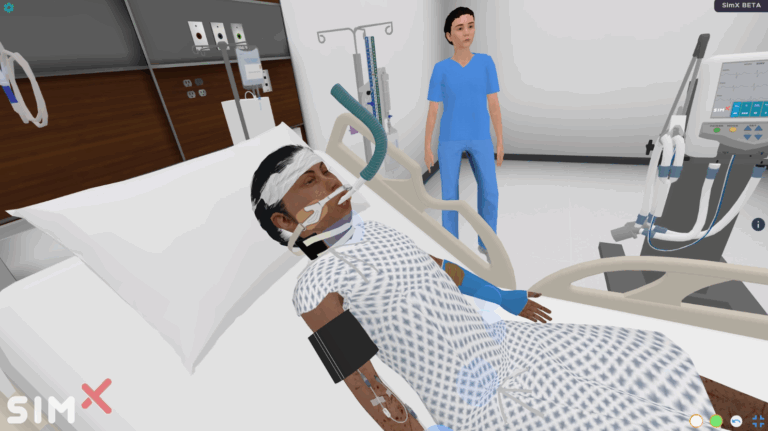
This scenario is designed to assess an individual learner's ability to recognize signs and symptoms of cardiogenic shock in a 60-year-old male. On a telemetry floor, Learners receive handoff inside the patient's room from the nurse coming off their shift. Upon entering the patient's room, the Learner should actively assess...

Cardiac/Telemetry Cardiology Critical Care

This scenario is designed to assess an individual learner's ability to recognize signs and symptoms of cardiogenic shock in a 60-year-old male. On a telemetry...

Case Information:
Bundles:
Learner Population: Nursing, Physician/Advanced Practice Provider
Specialty: Cardiology, Critical Care, Cardiac/Telemetry
Author: TriHealth
Language: English
Room size: 12x12
Setting: Hospital
Patient ect:
Patient Gender: Male
Tags: 'SUSPECT-CS', best practice alert, cardiogenic shock, cardiovascular, clinical skills, Critical Care, healthcare simulation, heart failure, meded, Medical Simulation, nursing care steps, nursing education, patient assessment, patient decompensation, shock management, SimX, telemetry, Virtual Reality, VR training,
Coming Soon

Pediatric Traumatic Brain Injury (TBI)—Hospital-Based

Uniformed Services University of the Health Sciences

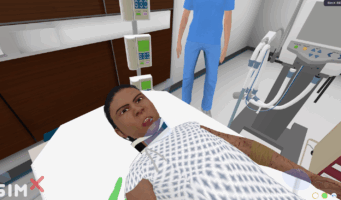
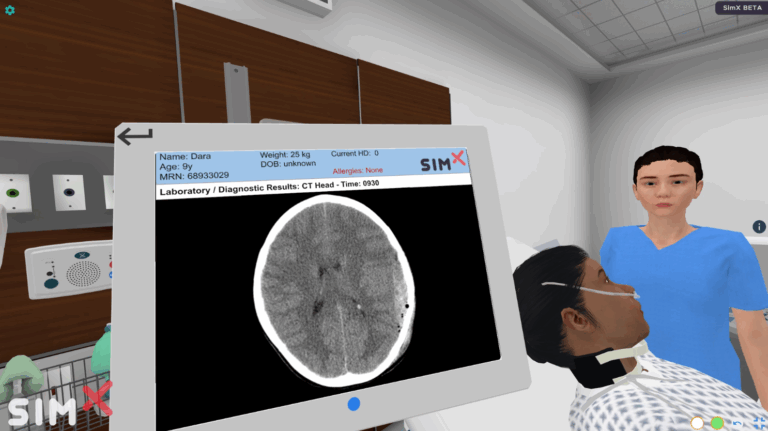
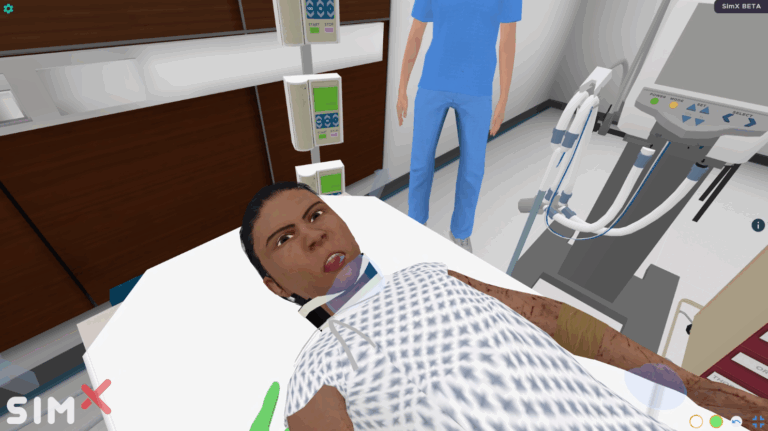
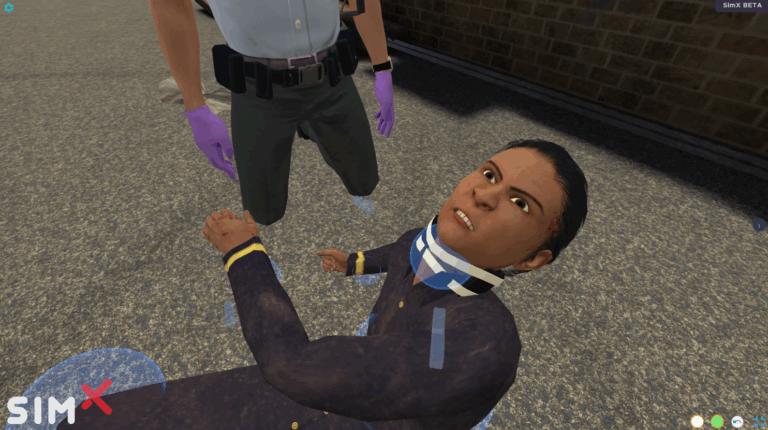
A 9-year-old is evaluated after a traumatic injury. The trainee must stabilize the patient in a hospital-based environment. On arrival, the child appears agitated. Their exam is remarkable for superficial scrapes and a left arm fracture. The patient’s head is covered, hiding a significant scalp wound. After completion of the...
Critical Care Emergency Medicine Family Medicine Internal Medicine Pediatrics Surgery Trauma

A 9-year-old is evaluated after a traumatic injury. The trainee must stabilize the patient in a hospital-based environment. On arrival, the child appears agitated. Their...

Case Information:
Bundles:
Learner Population: Nursing, EMS/Prehospital, Physician/Advanced Practice Provider
Specialty: Critical Care, Emergency Medicine, Internal Medicine, Pediatrics, Family Medicine, Surgery, Trauma
Author: Uniformed Services University of the Health Sciences
Language: English
Room size: 12x12
Setting: Outdoor, Emergency Department, ICU, PICU
Patient ect:
Patient Gender: Female, Male
Tags: Abnormal Neurologic Exam, airway protection, anti-epileptic medications, Arm Fracture, Arm Injury, Arm Splint, atls, AVPU, brain herniation, C-Spine, cervical spine precautions, Critical Care, CT, Cultural Differences, emergency medicine, Epidural Hematoma, Epidural Hemorrhage, Evaluates for Hemorrhage, Foreign Language, Full Exposure, GCS, GCS assessment, Glucose, head injury, healthcare simulation, Hypertonic Solution, Hypothermia Management, increased intracranial pressure management, interpreter, intubation, Neck Injury, neuro decline, Neurology, neurosurgery, neurosurgery consultation, Open Fracture, pediatric trauma care, pediatric traumatic brain injury, Peds TBI, Rapid Sequence Intubation, RSI, sedation, seizure, Serious Head Injury, SimX, TBI, TBI simulation, Translation, trauma, Trauma Assessment, Trauma Surgery, traumatic brain injury, traumatic seizure, Ventilator, virtual reality simulation, VR medical training, VR training, X-Ray,